


In automation, focus often lies on the visible: movement, cycles, speed, output – frequently identified with innovation.
For designers, that product is the result of deeper choices. The critical point isn’t how a machine moves, but why it moves that way, and how well it adapts to change. True value is built upstream, by rethinking processes for flexibility, integration, and evolutionary capacity.
This demands a shift in design approach: building architectures intrinsically ready for evolution, not just solutions that “work.”
In Meccatronica, design is a structural integration of mechanics, electronics, and software, where each component is conceived for the system’s overall behavior over time.
The goal isn’t merely to generate output, but to make processes more reactive, scalable, and aligned with technological and market trajectories.
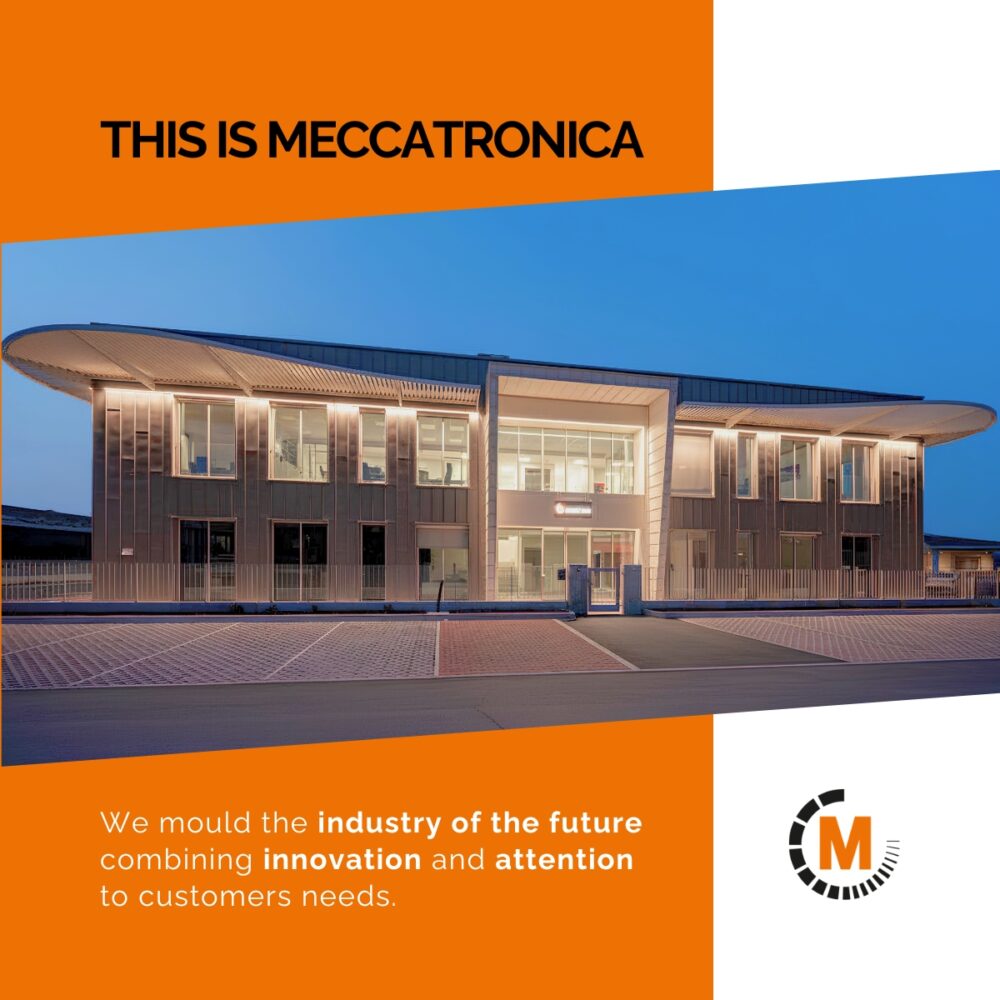
The phrase “We mould the Industry of the Future” stems from this vision. It’s not just an evocative message, but a precise design statement: to develop systems that don’t merely execute, but guide companies through their evolution, consistently balancing performance, flexibility, and adaptability.
